
Cass County Arrest Warrants Explained
A Cass County arrest warrant is a judge's order authorizing an officer to arrest a named person, and it is the more serious of the two orders a person usually encounters. It follows a complaint and a finding of probable cause. The sheriff's office carries these orders out, and the Cass County daily list marks each entry with an Arrest type so a reader can tell them apart. Minnesota's criminal rules place the warrant decision with a judge of the district court. The judge can direct a summons instead, and the rule prefers a summons in many situations. A warrant becomes the choice only when the circumstances the rule describes are present, which is why not every case produces one.
Cass County Arrest Warrant Probable Cause
A criminal case in Cass County usually opens with a complaint backed by sworn statements. The support can be testimony, a written statement, or something signed under penalty of perjury. A judge reads that material and decides two things: whether the case may proceed, and whether a warrant should issue. None of that paperwork reaches the public warrant list. That gap matters. The list gives a name, an age, a date, a level, and a charge field, nothing more. The complaint, the affidavit, and the judge's order stay in the case file, and access to those papers follows the court's rules. A list row alone cannot explain a case, so treat it as a lead and not an answer.
Inside a Cass County Arrest Warrant
A warrant is a short document with required parts. Minnesota Rule 3.02 lists what it must contain, and the Cass County public list shows only a small slice of that.
| Person named or described | The person the order authorizes an officer to arrest. |
|---|---|
| Offense | The charge the case is built on, which is not a conviction. |
| Bail amount | Set in the order. The public list does not print it. |
| Conditions | Terms attached to release or to the warrant itself. |
| Judge's signature | What makes the document an order rather than a request. |
| Case number | The identifier the court uses. It can read CR-##-######. |
Cass County Arrest Warrants Under Rule 3
Minnesota Rule of Criminal Procedure 3 sets out both the summons path and the warrant path. The warrant must name or describe the person, identify the offense, and state the bail amount and any conditions. A summons works differently. It orders an appearance without authorizing an immediate arrest. Reading Minnesota Rule 3 on warrants and summonses shows how the two documents differ in effect and why a Cass County judge might choose one over the other. It is the authority a judge here applies when a case that could have started with a summons instead produces an arrest order.
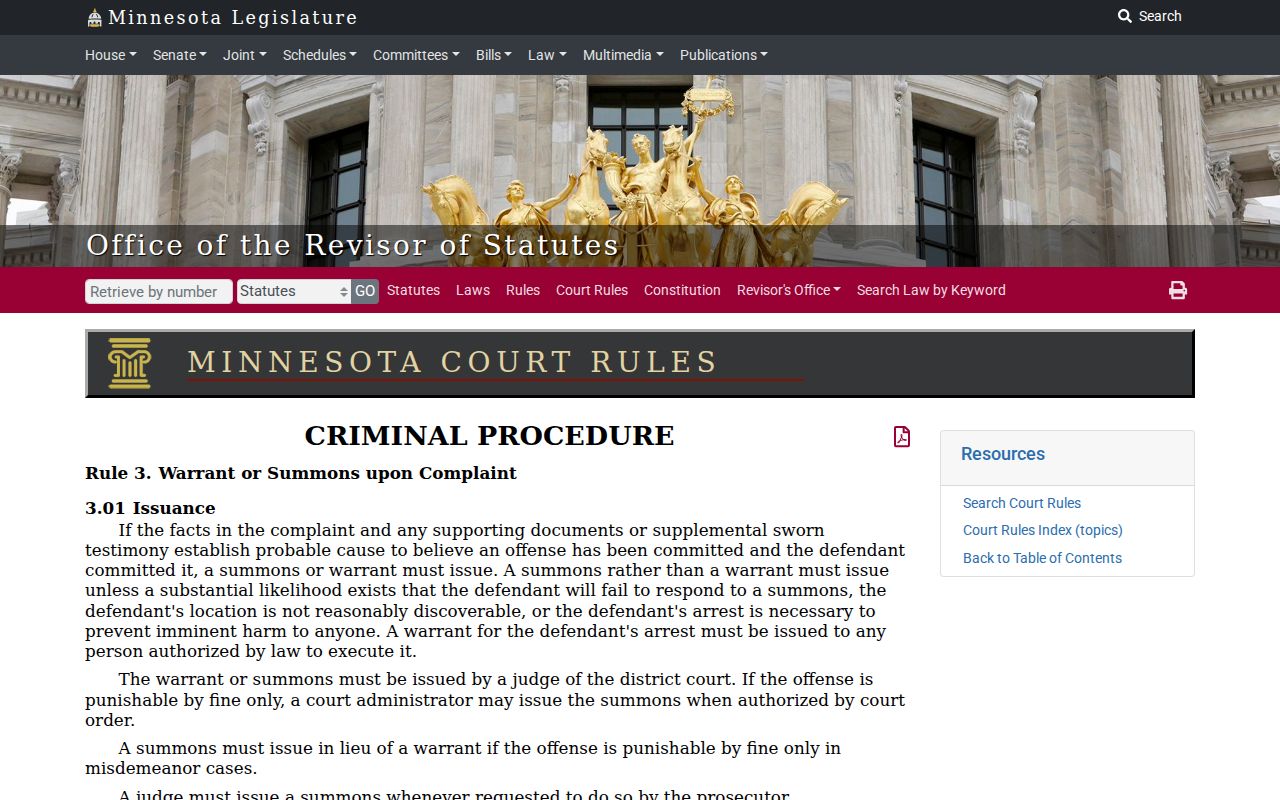
The rule matters most when you are working out why a Cass County case produced an order instead of a notice.
Serving Arrest Warrants in Cass County
The Cass County Sheriff's Office serves writs, warrants, commitment papers, and court orders, and it runs the county jail. Deputy sheriffs, city police officers, and other authorized officers can execute a warrant. The sheriff's civil-process page covers a different kind of service, so do not mistake a civil paper for a criminal warrant. The sheriff publishes the county's public list through the Detention Center and Jail page, which is also the routing point for custody questions. Service questions go to the sheriff. Case questions go to the court. Service can happen at a traffic stop, at a home, or when a person walks in voluntarily. A city officer can make the arrest even though the court issued the order, which is why the agency at the door is often not the office holding the record.
Where Minnesota Arrest Warrants Are Served
Under Rule 3.03, an authorized officer may execute a warrant anywhere in Minnesota. The officer need not be holding the paper itself, but must tell the person that a warrant exists and what the charge is. Section 629.32 governs showing the warrant when the person asks, and it requires no more restraint than the situation needs. In a county this large, that rule has real weight. A Cass County warrant does not expire at the county line, and a person stopped far from Walker can still be held on it.
Warrantless Arrests and Cass County Warrants
Minnesota law also allows arrests without any warrant at all, in the circumstances section 629.34 describes. So the public list is not the only road to an arrest, and a missing name is no promise that one cannot occur. The list covers one category of court orders and says nothing about the rest of the law. Keep those ideas apart when you read a Cass County list row, because a blank result answers only the narrowest version of the question.
Comparing Arrest, Summons, and Bench Warrants
Three documents, three different effects, and one shared courthouse.
| Document | What it does | How it starts |
|---|---|---|
| Arrest warrant | Authorizes an officer to take a person into custody | A complaint and a probable-cause finding |
| Summons | Orders an appearance without immediate arrest authority | The same case, when the rule favors a notice |
| Bench warrant | Brings a person in after a missed obligation | A missed date, a missed response, or a violated condition |
| Sign-and-release | A summons and release procedure after a nonappearance | Court action under section 629.415 |
Federal Warrants Are Not Cass County Warrants
A federal arrest warrant is a different animal. It comes from a federal court, not from Cass County District Court. Federal criminal cases in Minnesota belong to the U.S. District Court for the District of Minnesota, and the U.S. Marshals Service chases federal fugitives in the district. Cass County publishes no list of federal warrants. The county's daily list skips them entirely. Some federal dockets show up through PACER, though sealed documents may stay hidden even there. The District of Minnesota court site is where a federal question starts. Its public resources page lays out the entry points. A county records request, meanwhile, cannot certify anyone's federal status. That answer sits with the federal court alone.
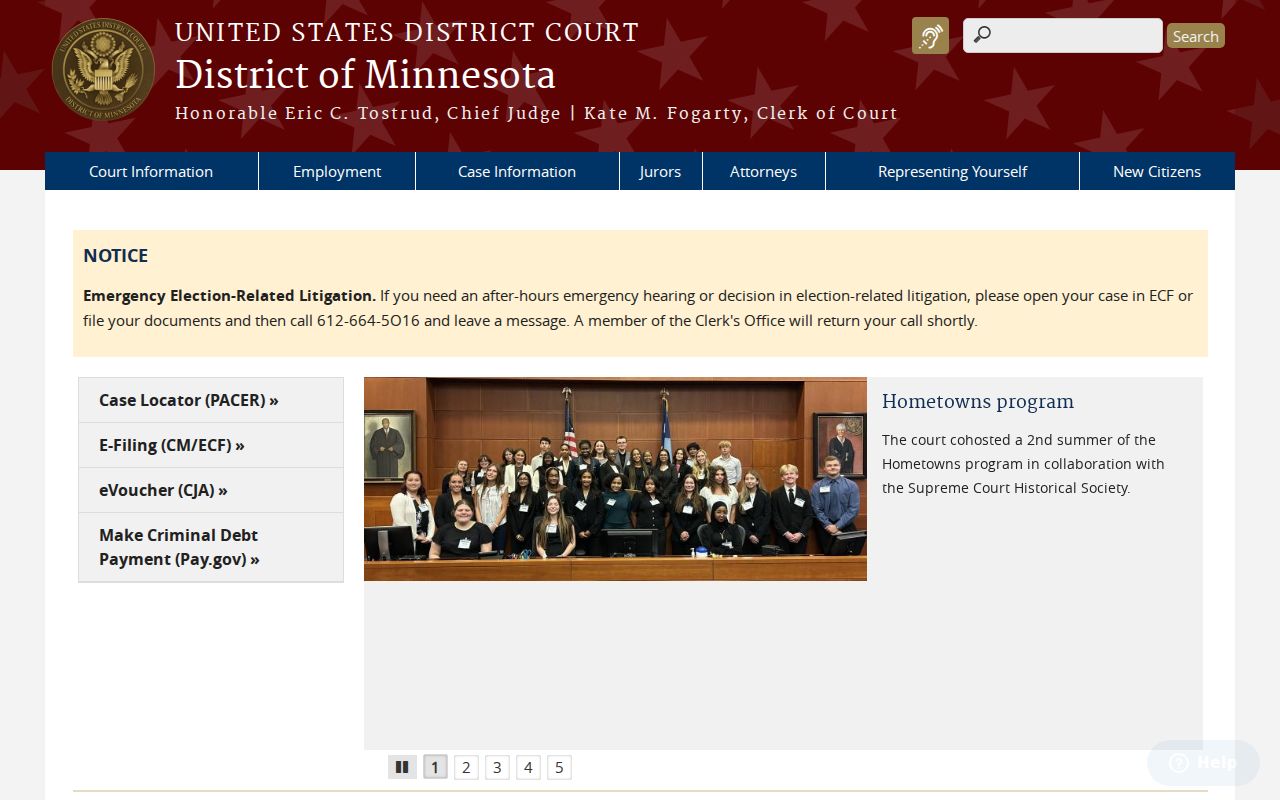
Check the paperwork first. If it names a federal court, skip county sources and take the federal route. Federal records carry federal fees too. The PACER pricing page explains how per-page charges work for certain federal documents, and that pricing explanation notes the charges follow federal rules rather than Minnesota's data practices law.
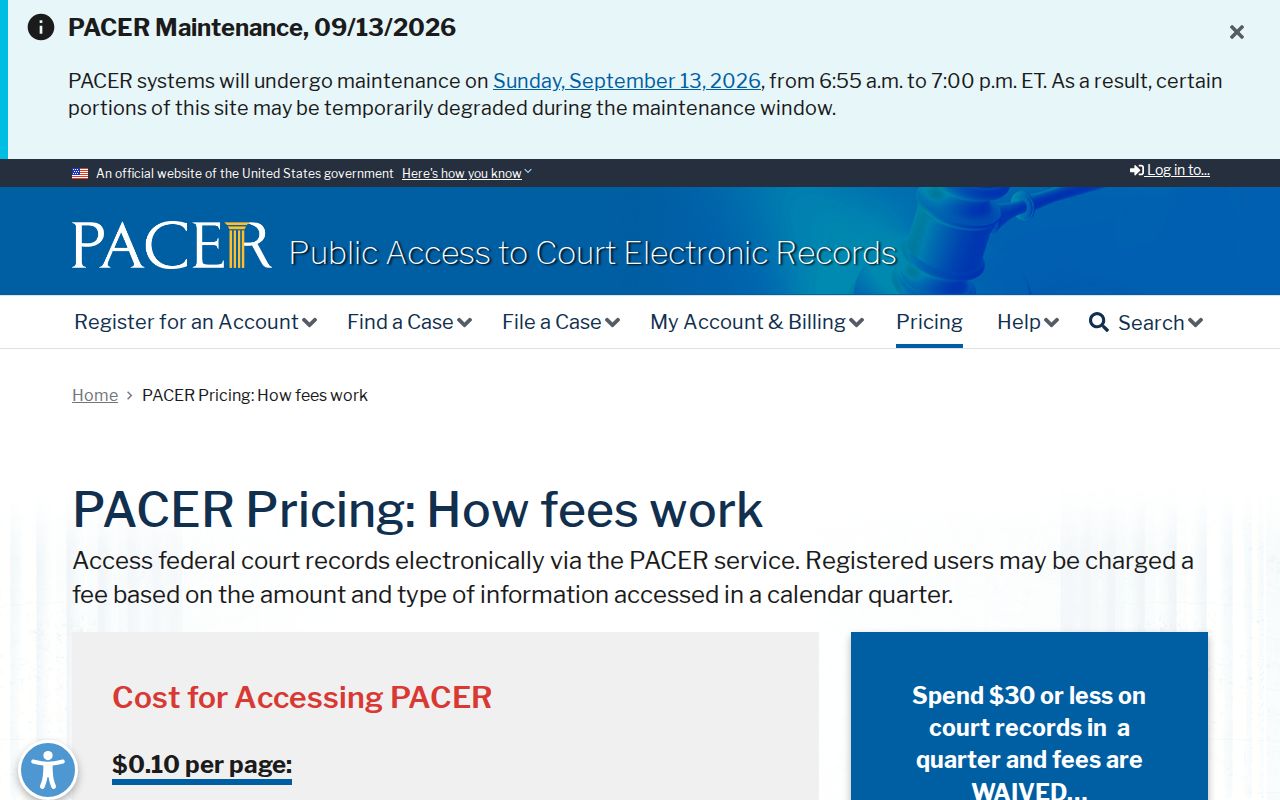
A federal fee question belongs with the federal court, not the county records desk.
Cass County Warrants and Guilt
A warrant is one step in a case, not the end of it. It tells you a judge authorized an arrest. Nothing more. The offense level printed beside a name is a classification, not an outcome. For that reason, the names, ages, and charge text from the daily file are left on Cass County's own publication rather than repeated here. Questions about a specific case belong with the court that holds it. The judge who issued the warrant is the one who can move it.
If There Is an Arrest Warrant for You
An active arrest warrant is the moment to call a lawyer first. Confirm the case with Cass County Court Administration so you know what you face. Then get advice on appearing, on what bail may apply, and on whether a recall is possible. A list row is not the whole story. Avoiding the problem only makes it worse.
Next Steps: Confirm the case with the court, speak with an attorney before deciding how to appear, and ask what bond or conditions the order sets. The home page gathers the steps for handling a Cass County warrant.